
As the chilly winds swirl outside, I find myself craving something deeply comforting, reminiscent of heartwarming meals shared with loved ones. Enter Budae Jjigae, or Korean Army Stew—a beautifully spiced one-pot dish that marries traditional Korean ingredients with American classics. This richly flavored stew is loaded with tender pieces of spam, savory sausages, and delightful ramen noodles, making it the ultimate cozy meal. Plus, its delightful customization options mean you can tweak the ingredients to fit your taste—whether you want to add more veggies or kick up the heat! Ready to warm your soul with a delicious bowl of Budae Jjigae? Let’s dive into this savory adventure together!

Why Will You Love Budae Jjigae?
Unforgettable Flavors: Budae Jjigae packs a punch with spicy gochugaru and kimchi, creating a vibrant flavor profile that dances on your palate.
Customizable Goodness: Enjoy a comforting meal tailored to you by swapping in your favorite proteins and veggies, making every cooking session unique.
One-Pot Wonder: With everything cooked in one pot, you’ll save time on clean-up while maximizing the savory infusion of flavors.
Quick & Easy: This recipe comes together swiftly, making it perfect for weeknight dinners or when friends pop by unexpectedly!
Crowd Favorite: The combination of cheesy, hearty, and spicy ingredients will have everyone coming back for seconds—it’s a dish meant for sharing!
Ready to experience the cozy allure of Budae Jjigae? Don’t forget to check out other customizable dishes like our one-pot pasta for delightful meal ideas!
Budae Jjigae Ingredients
• Dive into the flavorful world of Budae Jjigae with these essential ingredients!
For the Stew
- Spam – Provides a salty, savory flavor and protein; can substitute with other canned meats or tofu for a vegetarian option.
- Sausage – Adds richness and depth; feel free to use your favorite sausage or a vegetarian alternative.
- Tofu – Offers a plant-based protein source; firm tofu is recommended as silken tofu may disintegrate in stew.
- Rice cakes – Adds texture and chewiness; can be replaced with thick noodles if rice cakes are unavailable.
- Onion – Provides sweetness and depth of flavor; yellow onions work best, but any onion variety can be used.
- Enoki mushrooms – Contributes delicate texture and umami flavor; substitute with button or shiitake mushrooms if preferred.
- Kimchi – Introduces spiciness and fermented flavor; choose any variety based on availability and personal taste.
- Garlic – Essential for flavor; minced garlic enhances the stew’s aromatic profile.
For the Sauce
- Gochugaru (Korean red pepper flakes) – Provides heat and a smoky flavor; adjust the amount to taste for your desired spice level.
- Gochujang (Korean chili paste) – Adds sweetness and depth; can be substituted with sriracha or a similar chili paste.
- Soy sauce – For saltiness and umami; tamari serves as a gluten-free alternative.
- Mirin – Adds sweetness and balances flavors; can replace with a mix of sugar and a splash of rice vinegar.
- Sugar – Enhances flavor balance; swap with honey or agave if preferred.
- Black pepper – For a hint of spice; adjust according to your taste.
For the Broth & Noodles
- Chicken broth – Forms the stew’s base; vegetable broth works well for a vegetarian version.
- Ramen noodles – Provides filler and texture; any instant noodle variety can be used.
- Cheese – Optional topping that adds creaminess; mozzarella or cheddar are great choices.
Now that you have the ingredients for your delicious Budae Jjigae, gather them up and let’s transform them into a cozy meal to share with loved ones!
Step‑by‑Step Instructions for Budae Jjigae
Step 1: Prepare the Sauce
In a medium bowl, combine minced garlic, gochugaru, gochujang, soy sauce, mirin, sugar, and black pepper. Stir well until all ingredients are fully blended into a smooth sauce. This savory mixture will infuse your Budae Jjigae with delicious flavors, so set it aside while you prep the other ingredients.
Step 2: Combine Ingredients
Take a large shallow pot and layer in the slices of spam, sausage, and tofu evenly across the bottom. Next, add rice cakes, chopped onion, enoki mushrooms, and kimchi on top. The colorful layers will create a beautiful base for your stew, ready to soak up the flavors as they cook together.
Step 3: Add Sauce & Broth
Pour the prepared sauce generously over the layered ingredients in the pot. Then, carefully add the chicken broth until the ingredients are almost covered. Cover the pot with a lid, place it over medium-high heat, and bring everything to a gentle boil, allowing the flavors to meld for about 10 minutes.
Step 4: Cook Noodles
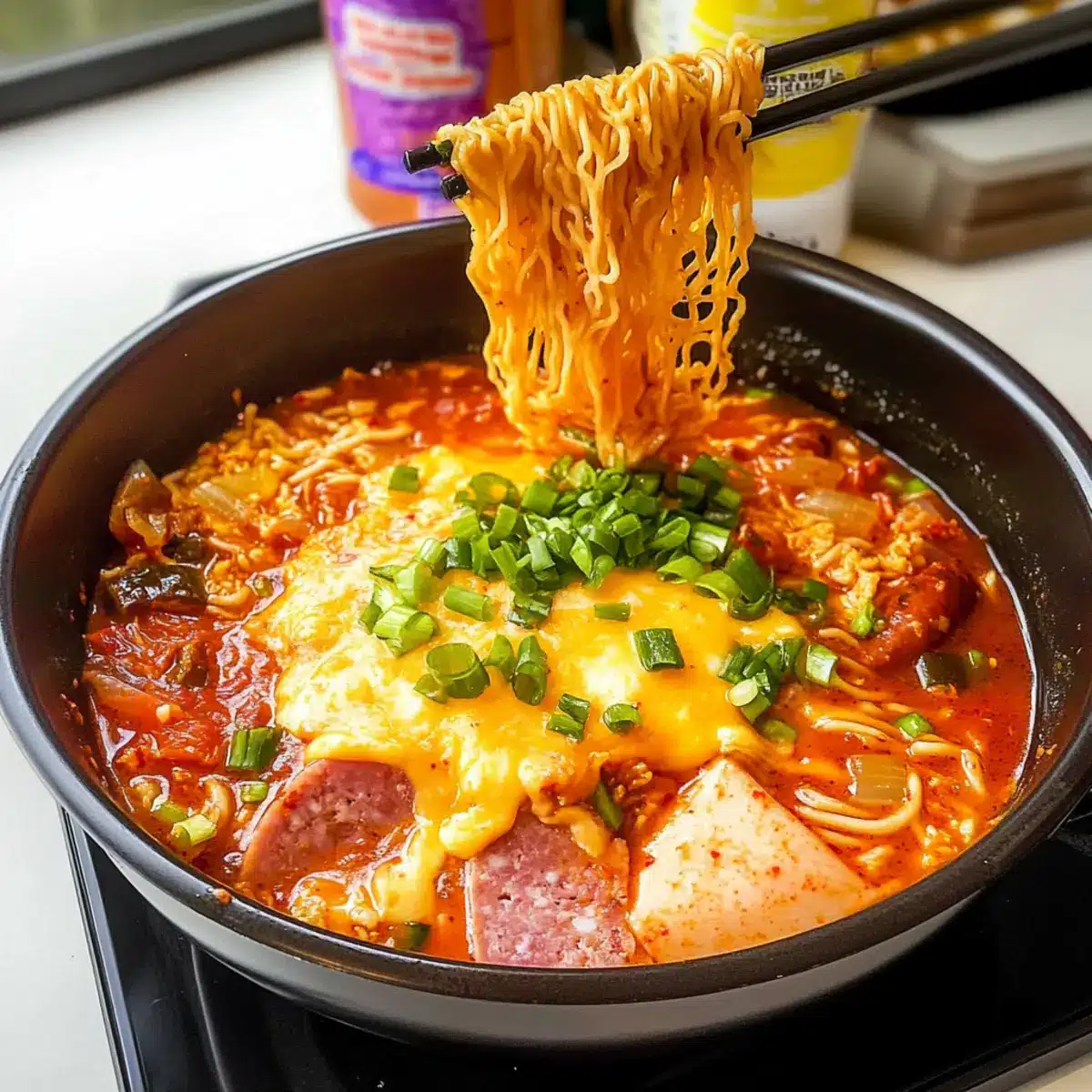
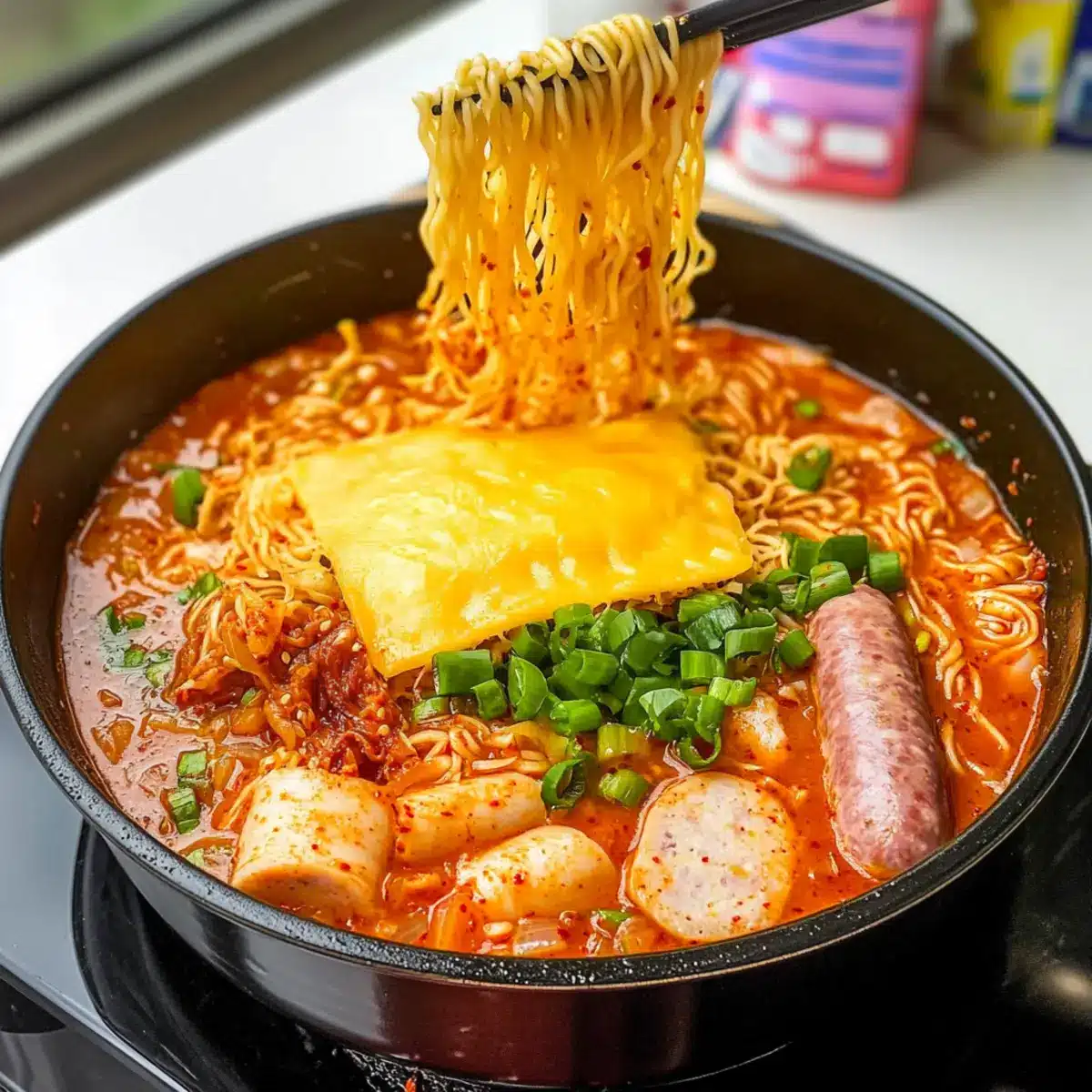
Once the stew reaches a boil, remove the lid and add the ramen noodles on top of the bubbling broth. If desired, sprinkle cheese across the noodles for a creamy finish. Cover the pot again and continue to cook for an additional 5-7 minutes or until the noodles are tender and heated through.
Step 5: Serve
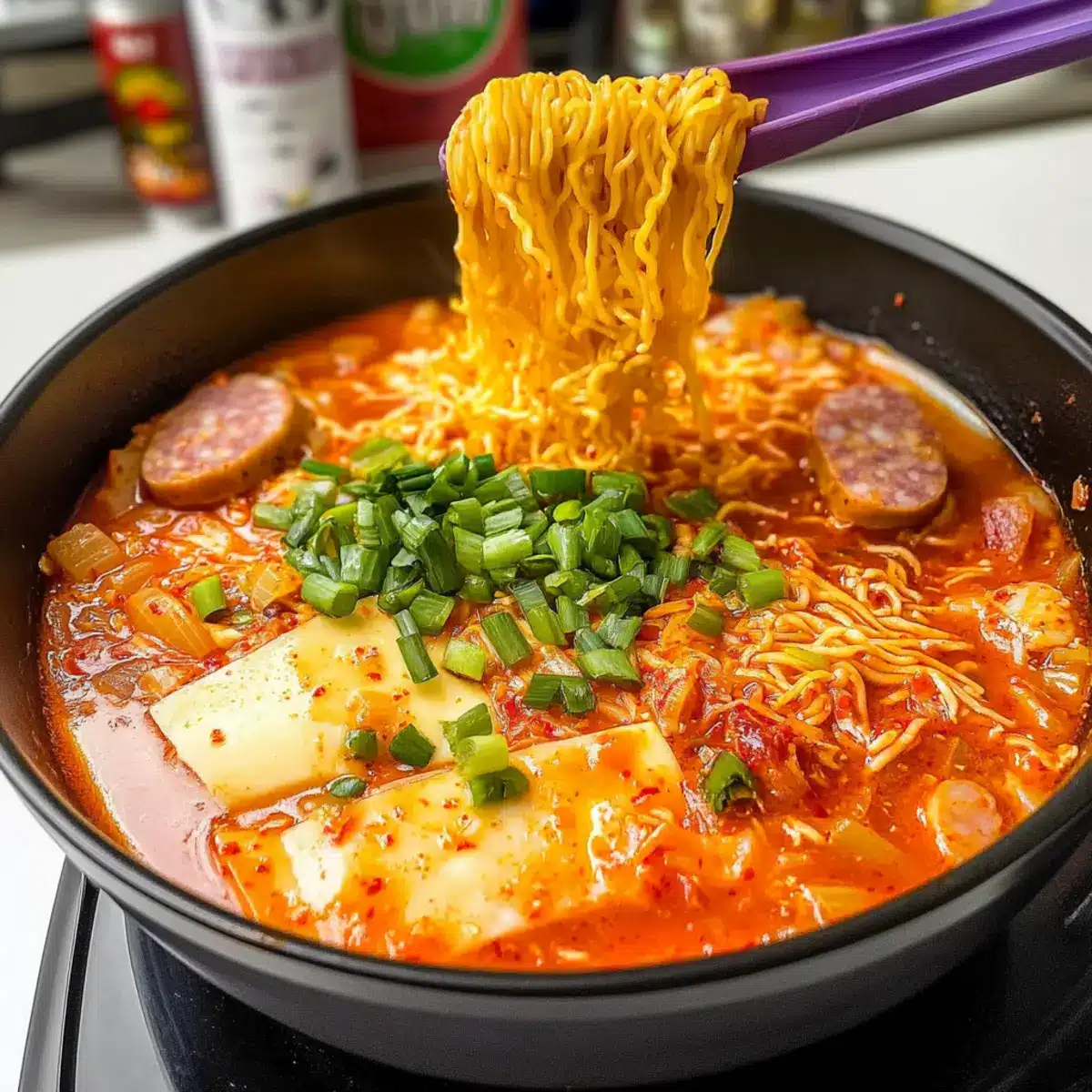
Once your Budae Jjigae is done, give it a gentle stir to combine all the delicious layers. Spoon the hearty stew into bowls, garnishing with chopped green onions for a fresh touch. Serve hot over steamed rice or as is, and enjoy this comforting one-pot meal with family and friends.
Variations & Substitutions for Budae Jjigae
Get ready to tailor your Budae Jjigae to satisfy your palate while enjoying a comforting bowl of delightful flavors!
-
Protein Swap: Substitute spam with cubed beef, chicken, or pork for a heartier stew. Each meat brings its unique flavor, enhancing the overall taste.
-
Vegetarian Delight: Replace all meats with extra tofu, mushrooms, and a medley of colorful vegetables. This swap ensures everyone can enjoy a savory bowl of goodness!
-
Extra Veggies: Jazz up your stew by incorporating leafy greens like spinach or bok choy. This not only boosts nutrition but also adds a pop of color.
-
Cheese Lovers: If you adore cheesy goodness, experiment with different cheeses such as gouda or pepper jack for an extra layer of flavor and creaminess!
-
Rice Noodles: Swap out ramen noodles for rice noodles if you’re looking for a gluten-free option. Just soak them beforehand for even better texture.
-
Heat Levels: Adjust the spiciness by using less gochugaru or experimenting with chili oil for a different flavor twist. Tweak it to your heat tolerance!
-
Fermented Fun: Try adding other fermented ingredients like pickled radish for a tangy kick that plays well with the stew’s rich flavors.
-
Broth Variations: Use miso broth for a unique umami twist or coconut milk for a creamy, spicy Thai-inspired stew. Each option will take your Budae Jjigae in a new direction!
With these variations, your Budae Jjigae will become a beloved dish that reflects your personal taste. Don’t forget to explore our one-pot pasta for even more exciting meal ideas!
What to Serve with Budae Jjigae?
As you savor each comforting spoonful of Budae Jjigae, consider these delightful accompaniments to create a complete and satisfying meal.
-
Steamed Rice: A classic pairing that absorbs the rich broth, balancing the stew’s spice with warm, comforting grains.
-
Pickled Vegetables: These tangy bites add a refreshing crunch that complements the savory flavors of Budae Jjigae beautifully.
-
Korean Pancakes: Crispy and savory, they offer a delightful texture contrast, enhancing the overall experience with every bite.
-
Green Salad: A light, fresh salad made with crisp greens and a zesty vinaigrette brightens the meal and balances its richness.
-
Sesame Oil Drizzle: A simple drizzle over the stew can elevate the flavors, adding a nutty aroma and richness that feels luxurious.
-
Jjigae Tofu: Add small cubes of tofu in a separate dish for those wanting extra protein, creating a perfect side for a heartier meal.
Pairing these delightful options with your Budae Jjigae will not only enhance the dining experience but also make for a cozy gathering around the table. Enjoy each moment as you create a meal filled with warmth and comfort!
Make Ahead Options
Budae Jjigae is ideal for meal prep, making it a breeze for busy weeknights! You can prepare the sauce up to 24 hours in advance by mixing garlic, gochugaru, gochujang, soy sauce, mirin, sugar, and black pepper in a bowl—just keep it refrigerated in an airtight container. The other ingredients, like the spam, sausage, tofu, and vegetables, can be layered in the pot and stored in the fridge for about 3 days before cooking. When you’re ready to enjoy your stew, simply pour in the prepared sauce along with the chicken broth and bring everything to a boil. You’ll have a delicious and comforting bowl of Budae Jjigae ready in no time, just as delightful as if it were freshly made!
Expert Tips for Budae Jjigae
- Balance the Heat: Start with a small amount of gochugaru and gochujang. You can always add more for spice, but it’s tricky to tone down heat once added.
- Ingredient Variability: Don’t hesitate to experiment with different meats or veggies based on what you have. This flexibility makes your Budae Jjigae truly yours!
- Layer Wisely: Place denser ingredients like spam and sausage at the bottom to ensure they cook through, while more delicate ingredients like kimchi should go on top.
- Cook Noodles Last: Adding noodles too early can make them mushy. Wait until the stew is almost done to achieve that perfect chewy texture.
- Garnish for Freshness: Top your finished dish with chopped green onions for a burst of freshness that elevates the flavors beautifully.
- Store Properly: If storing leftovers, keep the noodles separate to maintain their texture. Mix them in just before reheating for the best experience.
Storage Tips for Budae Jjigae
-
Fridge: Store leftover Budae Jjigae in an airtight container for up to 3 days. Allow it to cool before sealing to maintain freshness.
-
Freezer: For longer storage, freeze portions of Budae Jjigae in freezer-safe containers for up to 2 months. Be sure to leave some space for expansion as it freezes.
-
Reheating: When reheating, gently warm on the stovetop over medium heat, adding a splash of broth or water if needed to loosen the stew. Avoid overheating to preserve flavor and texture.
Budae Jjigae Recipe FAQs
What type of kimchi should I use for Budae Jjigae?
You can use any variety of kimchi based on your preference and availability. Classic napa cabbage kimchi works wonderfully, but radish kimchi or cucumber kimchi can also add a unique flavor. Just ensure it’s fermented enough to impart that delightful tang to your stew!
How should I store leftover Budae Jjigae?
Store leftover Budae Jjigae in an airtight container in the refrigerator for up to 3 days. Allow the stew to cool before sealing it, which helps maintain its freshness. When you’re ready to enjoy it again, simply reheat on the stovetop over medium heat, adding a splash of broth or water if needed to retain its deliciousness.
Can I freeze Budae Jjigae?
Absolutely! To freeze Budae Jjigae, portion it out into freezer-safe containers, leaving some space for expansion as it freezes. It can be stored for up to 2 months. When you’re ready to enjoy it, thaw it overnight in the refrigerator and reheat on the stovetop gently, adding more broth if necessary to keep it from getting too thick.
What do I do if the broth is too salty?
If you find your Budae Jjigae broth a bit too salty, don’t worry! You can balance it by adding a little water or unsalted broth to dilute the flavors. Alternatively, include extra vegetables like sliced potatoes or carrots; they will soak up some saltiness while adding texture and nutrition. Just let it simmer for a while until the veggies are tender.
Which ingredients can I substitute for a vegetarian version?
For a vegetarian Budae Jjigae, replace the spam and sausage with extra firm tofu and a variety of vegetables, such as zucchini, bell peppers, or carrots. You can also use veggie broth as the base, maintaining the depth of flavor. This version is just as comforting and adaptable to suit your taste!
Is Budae Jjigae suitable for kids?
Certainly! Budae Jjigae can be made kid-friendly by adjusting the spice levels. Use less gochugaru or gochujang to keep it mild, and include toppings like cheese to soften the flavors. The colorful ingredients and fun noodles make it an inviting dish for children!
Spicy Budae Jjigae: Your Ultimate Cozy One-Pot Delight
Ingredients
Equipment
Method
- In a medium bowl, combine minced garlic, gochugaru, gochujang, soy sauce, mirin, sugar, and black pepper. Stir well until blended.
- In a large pot, layer sliced spam, sausage, and tofu evenly at the bottom.
- Add rice cakes, chopped onion, enoki mushrooms, and kimchi on top.
- Pour prepared sauce over layered ingredients. Add chicken broth until ingredients are almost covered.
- Cover the pot and bring to a gentle boil over medium-high heat, allow to cook for about 10 minutes.
- Add ramen noodles on top of the boiling broth. Optionally sprinkle cheese on top and cover again.
- Cook for an additional 5-7 minutes or until noodles are tender.
- Gently stir to combine layers. Serve hot in bowls, garnished with chopped green onions.
Leave a Reply