
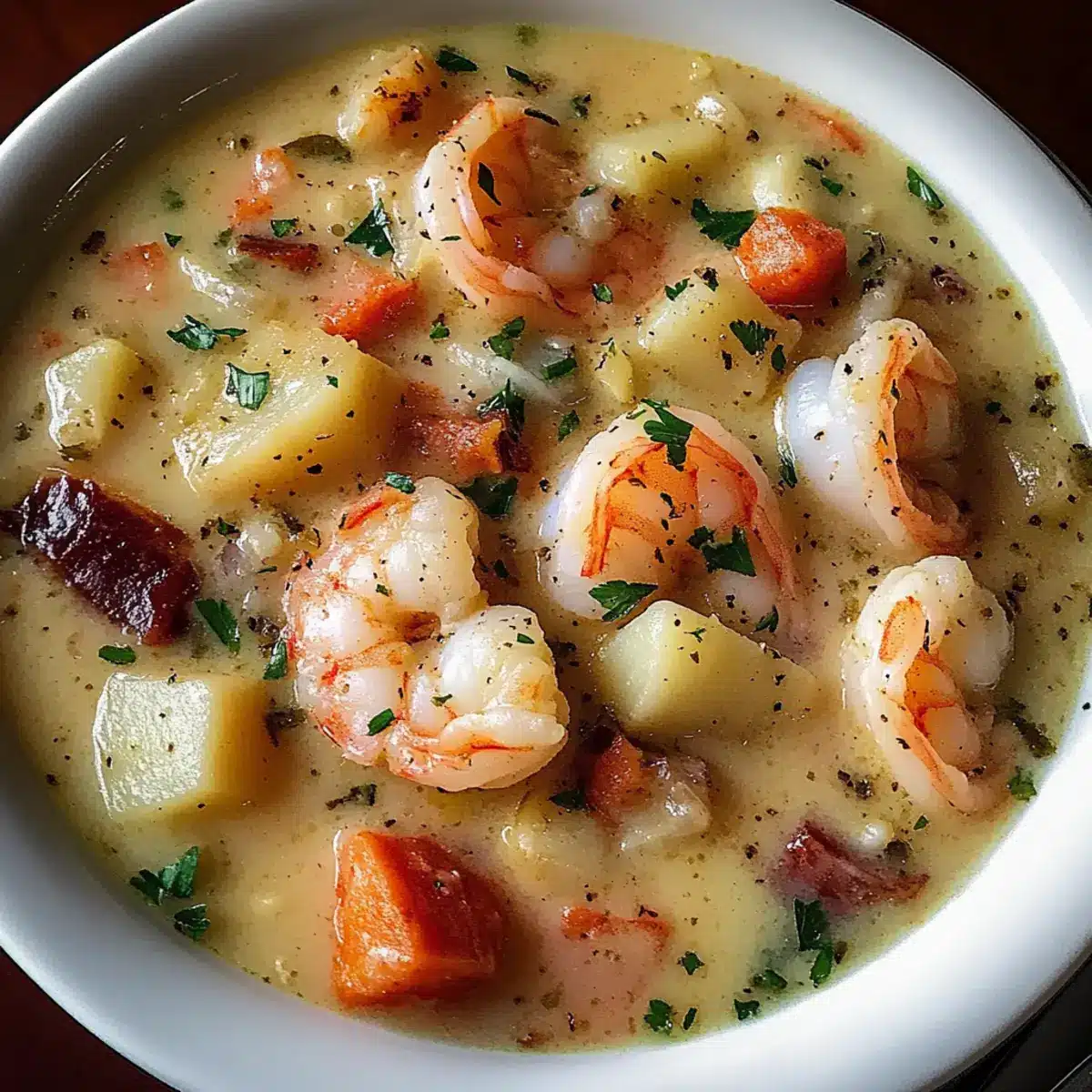
As the salty ocean breeze dances through the air, I recall the first time I tasted Nova Scotia Seafood Chowder on a chilly afternoon. This creamy maritime masterpiece, featuring fresh haddock and plump shrimp, wraps you in warmth and comfort like a snug blanket on a cold day. It’s quickly become one of my favorite recipes because not only does it deliver on taste, but it’s also versatile enough to impress during a cozy family dinner or a festive gathering with friends. With just a few key ingredients and minimal prep, you can create a rich, velvety dish that makes any weeknight feel special. Ready to dive in and treat yourself to a bowl of this coastal comfort? Let’s get started!
Why is this chowder a must-try?
Comforting, Creamy Goodness: This Nova Scotia Seafood Chowder wraps you in a deliciously rich embrace, combining the sweet flavors of fresh seafood and aromatic herbs for an unforgettable experience.
Easy-to-Follow Steps: With a straightforward cooking process, even intermediate chefs can master this dish in no time, making it perfect for home cooks looking to impress!
Impressive Crowd-Pleaser: Whether it’s a casual weeknight or a festive gathering, this chowder is sure to wow your guests. Pair it with warm crusty bread for a complete meal!
Customizable Delight: Feel free to swap out seafood or add in some seasonal vegetables. Check out our variation ideas for more inspiration!
Nostalgic Maritime Flavors: Every bowl transports you to the picturesque shores of Nova Scotia, making it a comforting reminder of coastal living right in your kitchen.
Nova Scotia Seafood Chowder Ingredients
For the Base
- Unsalted Butter – Provides richness and depth to the chowder; ensure it’s melted gently to avoid browning.
- Onion, Carrots, Celery – Aromatic base to build flavor; sauté until softened (5–7 mins).
- Garlic – Adds sweetness and aromatic depth; minced and cooked briefly to prevent burning.
- Potato (diced) – Acts as a thickener for the chowder; cook until fork-tender (15–20 mins).
- Seafood Stock – Provides the foundational flavor; can substitute with vegetable stock for a lighter version.
For Flavoring
- Dried Thyme – Adds herbal notes; consider fresh thyme for a more vibrant flavor.
- Bay Leaf – Infuses the chowder with earthy flavor; always remove before adding dairy.
For Creaminess
- Heavy Cream & Milk – Creates the chowder’s creamy base; important to maintain a gentle heat to prevent curdling.
For the Seafood
- Haddock (cubed) – Firm white fish adds substance; can substitute with cod or pollock.
- Shrimp (peeled and deveined) – Offers a sweet seafood flavor and texture; adjusts cooking times based on size.
- Scallops – Tender and delicate; can swap for crab meat or mussels.
For Seasoning
- Salt and Pepper – Essential for seasoning; balance creaminess with proper seasoning.
For Garnishing
- Fresh Parsley (chopped) – Adds freshness and color to the bowl.
- Lemon Wedges – Enhances flavor with a citrus burst when squeezed over the chowder.
Dive into creating your Nova Scotia Seafood Chowder with these thoughtfully selected ingredients and bring a taste of the coast to your table!
Step‑by‑Step Instructions for Nova Scotia Seafood Chowder
Step 1: Sauté the Vegetables
In a large pot, melt 4 tablespoons of unsalted butter over medium heat. Once melted, add diced onion, carrots, and celery to the pot, stirring occasionally for about 5–7 minutes until they become soft and translucent. This colorful aromatics base will set the stage for your rich Nova Scotia Seafood Chowder.
Step 2: Add Garlic
Stir in 2 minced garlic cloves and continue to cook for an additional minute, allowing the garlic aroma to fill your kitchen without letting it burn. Just until fragrant, this step adds depth to the flavor of your chowder, enhancing the comforting richness of the dish.
Step 3: Incorporate the Potatoes and Stock
Toss in 2 diced potatoes, 4 cups of seafood stock, 1 teaspoon of dried thyme, and 1 bay leaf. Bring the mixture to a gentle simmer over medium heat. Cook for 15–20 minutes, or until the potatoes are fork-tender, absorbing all the lovely flavors and creating a hearty base for your chowder.
Step 4: Remove the Bay Leaf and Add Dairy
Once the potatoes are tender, carefully remove the bay leaf from the pot. Stir in 1 cup of heavy cream and 1 cup of milk, keeping the mixture warm over low heat without boiling. This addition will create the signature creamy texture that makes Nova Scotia Seafood Chowder so irresistible.
Step 5: Add the Seafood
Gently fold in 1 pound of cubed haddock, 1 cup of peeled and deveined shrimp, and 12 ounces of scallops into the chowder. Cook for another 5–7 minutes, just until the seafood is opaque and cooked through. The seafood should be tender yet not rubbery, ensuring a delightful eating experience.
Step 6: Season to Perfection
Season the chowder to taste with salt and freshly ground black pepper, stirring carefully to combine. Each dash brings out the flavors and elevates this comforting dish, making your Nova Scotia Seafood Chowder even more deliciously satisfying.
Step 7: Serve and Garnish
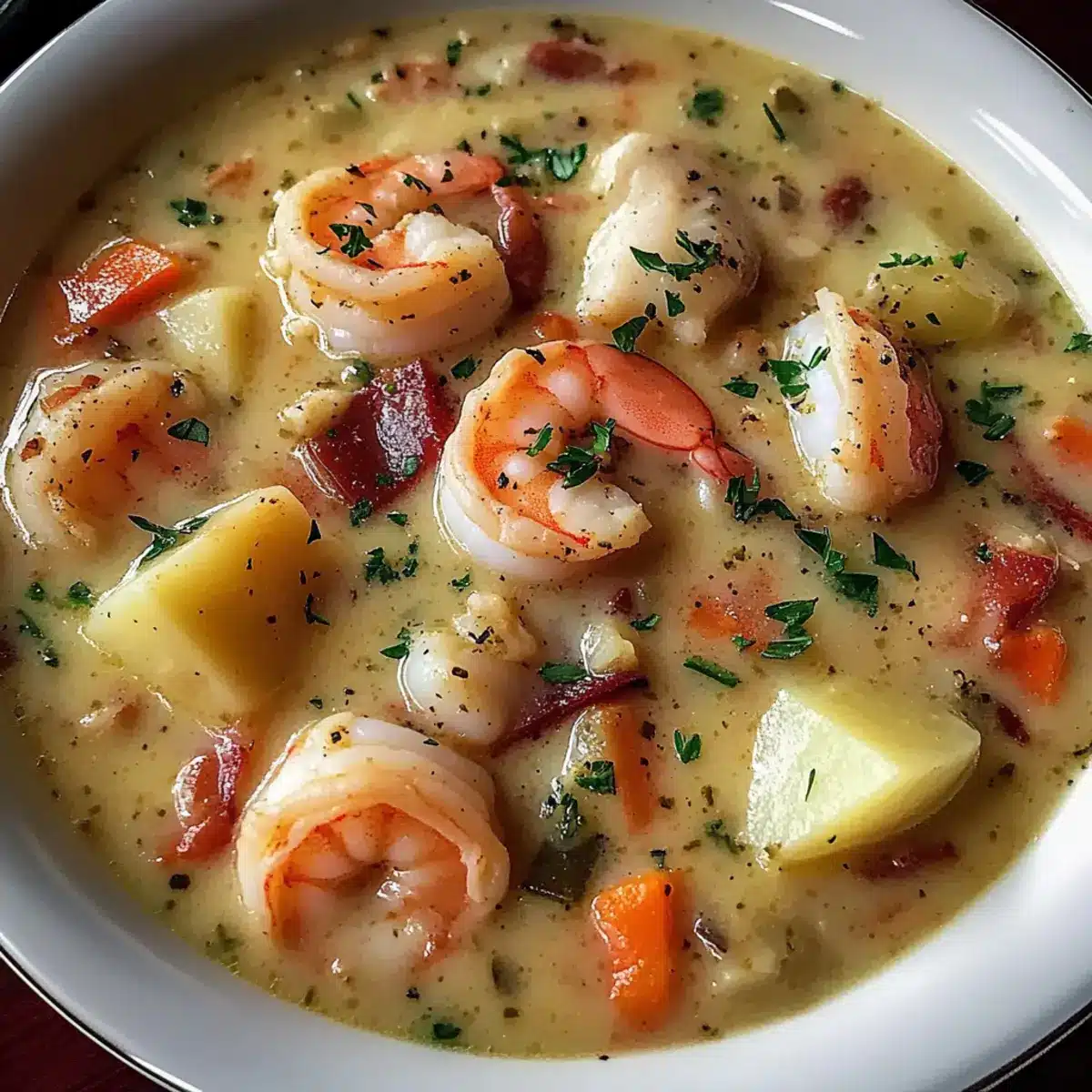
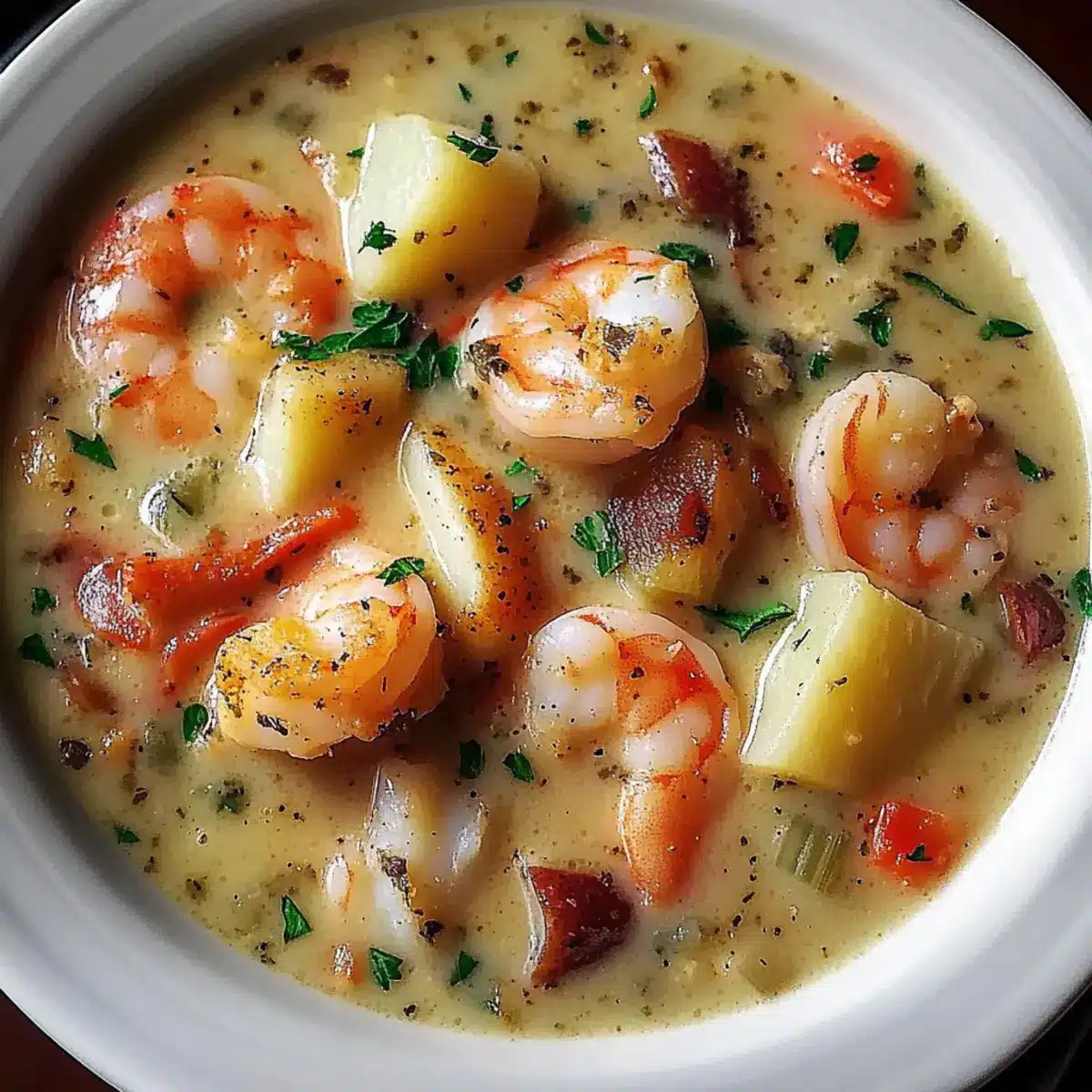
Ladle the chowder into warmed bowls, finishing each portion with a sprinkle of freshly chopped parsley for a burst of color. Serve alongside lemon wedges, allowing everyone to squeeze fresh citrus over their chowder, adding a delightful zing to this creamy coastal treasure.
Make Ahead Options
These Nova Scotia Seafood Chowder preparations are perfect for busy home cooks looking to simplify meal planning! You can chop the vegetables and store them in an airtight container in the refrigerator for up to 3 days. The base of the chowder can be prepared and refrigerated (minus the dairy and seafood) for up to 24 hours. To maintain the chowder’s creamy quality, add a splash of milk or cream when reheating. When you’re ready to serve, simply warm the base, stir in the seafood, and finish with the dairy over low heat until hot. You’ll enjoy a comforting seafood meal with minimal effort!
What to Serve with Nova Scotia Seafood Chowder
Nothing complements a bowl of creamy goodness quite like the perfect sides to elevate your dining experience.
- Crusty Bread: A warm, crusty baguette is perfect for dipping and soaking up the velvety chowder, enhancing the experience with every bite.
- Steamed Asparagus: Bright and tender, fresh asparagus adds a delightful crunch and a pop of color that balances the chowder’s creaminess beautifully.
- Crisp Green Salad: A light, refreshing salad with mixed greens and a zesty vinaigrette cuts through the richness, making each mouthful of chowder feel vibrant.
- Cheesy Biscuits: Flaky, buttery biscuits with a hint of cheddar provide a comforting, savory contrast, perfect for pairing with the chowder’s ocean flavors.
- Mini Cornbread Muffins: Sweet and crumbly cornbread muffins complement the seafood chowder, bringing a touch of warmth and nostalgia to the meal.
- Chardonnay: A chilled glass of crisp Chardonnay enhances the maritime flavors, while its acidity beautifully contrasts the richness of the chowder.
Nova Scotia Seafood Chowder Variations
Feel free to unleash your culinary creativity and make this chowder truly your own with these delicious twists!
- Dairy-Free: Use coconut milk instead of cream for a lighter, dairy-free option that still brings richness.
- Vegetable Boost: Add fresh corn or diced bell peppers for a pop of color and a hint of sweetness.
- Spicy Kick: Toss in diced jalapeños or a dash of cayenne pepper to elevate the heat level for spice lovers.
- Herb Swaps: Experiment with fresh dill or tarragon instead of thyme for a unique flavor profile that brightens the chowder.
- Seafood Mix: Mix and match seafood by including crab meat or clams, creating a lovely medley that tantalizes your taste buds.
- Citrusy Zing: Add a splash of fresh orange juice or zest along with lemon for a delightful citrus surprise in every bite.
- Thicker Texture: For a heartier chowder, blend a portion of it until smooth before adding the seafood; it creates a creamy yet chunky consistency.
- White Wine Infusion: Enhance the flavor by adding a ¼ cup of a quality dry white wine during the cooking process; the depth it brings is absolutely divine.
For even more ideas on how to customize your chowder, check out our variation ideas for a chance to create something uniquely delicious!
How to Store and Freeze Nova Scotia Seafood Chowder
Room Temperature: Allow the chowder to cool to room temperature before storing. It’s best consumed fresh, but can sit out for about 2 hours at room temperature if needed.
Fridge: Store leftover Nova Scotia Seafood Chowder in an airtight container in the refrigerator for up to 2 days. Reheat gently over low heat, stirring often to maintain a smooth texture.
Freezer: For longer storage, freeze the chowder in airtight containers or freezer bags for up to 3 months. Thaw in the fridge overnight before reheating.
Reheating: When reheating frozen chowder, warm it gently on the stove over low heat. Add a splash of milk or seafood stock if the chowder seems too thick.
Expert Tips for the Best Nova Scotia Seafood Chowder
- Heat Control: Keep the chowder base hot but not boiling before adding dairy to prevent curdling. This ensures a smooth, creamy consistency.
- Thicker Texture: For a thicker chowder, create a light roux by stirring flour into melted butter before adding vegetables. This will enhance the overall richness of your Nova Scotia Seafood Chowder.
- Seafood Timing: Adjust cooking times for larger seafood pieces; they may need extra minutes to cook through properly. Keep an eye on them to ensure tenderness.
- Leftover Storage: Store leftovers in an airtight container in the refrigerator for up to two days. Reheat gently to avoid rubbery seafood.
- Flavor Boost: Enhance flavors by adding about ¼ cup of dry white wine after sautéing the vegetables for a delightful depth in your chowder.
Nova Scotia Seafood Chowder Recipe FAQs
What seafood should I use for a Nova Scotia Seafood Chowder?
Absolutely! You can use various types of seafood based on your preference. Traditional choices like fresh haddock, shrimp, and scallops work beautifully. However, feel free to swap haddock for cod or tilapia, and consider crab meat or mussels in place of scallops for some delightful variety!
How should I store leftover Nova Scotia Seafood Chowder?
To keep your chowder fresh, allow it to cool to room temperature, then store it in an airtight container in the refrigerator for up to 2 days. When reheating, do so gently over low heat to avoid overcooking the seafood—and don’t forget to stir often!
Can I freeze Nova Scotia Seafood Chowder?
Very! You can freeze the chowder for up to 3 months. To do this, cool it down completely, then transfer to airtight containers or freezer bags. When ready to enjoy, thaw it overnight in the fridge, and reheat it gently on the stove. If it seems thick, add a splash of milk or seafood stock for creamy consistency.
What if my chowder is too thick?
No worries at all! If your chowder turns out thicker than you’d like after cooking, simply add a little warm milk or broth to loosen it up. Stir it in gently over low heat until you reach the desired consistency. It’s easy to adjust, so you can enjoy your perfect chowder!
How can I make this chowder pet-friendly?
While seafood like fish can be healthy for pets, creamy chowder might not be suitable due to dairy. If you want to share a little taste, consider offering your pets flaked fish or shrimp without seasonings. Always consult your veterinarian before introducing new foods to their diet.
What are some signs that my seafood is fresh?
When selecting seafood, look for bright, clear eyes (for whole fish) and a clean smell. Fresh seafood should also be firm to the touch and free from dark spots or off odors. If you can, buy from reputable sources to ensure top quality for your Nova Scotia Seafood Chowder!
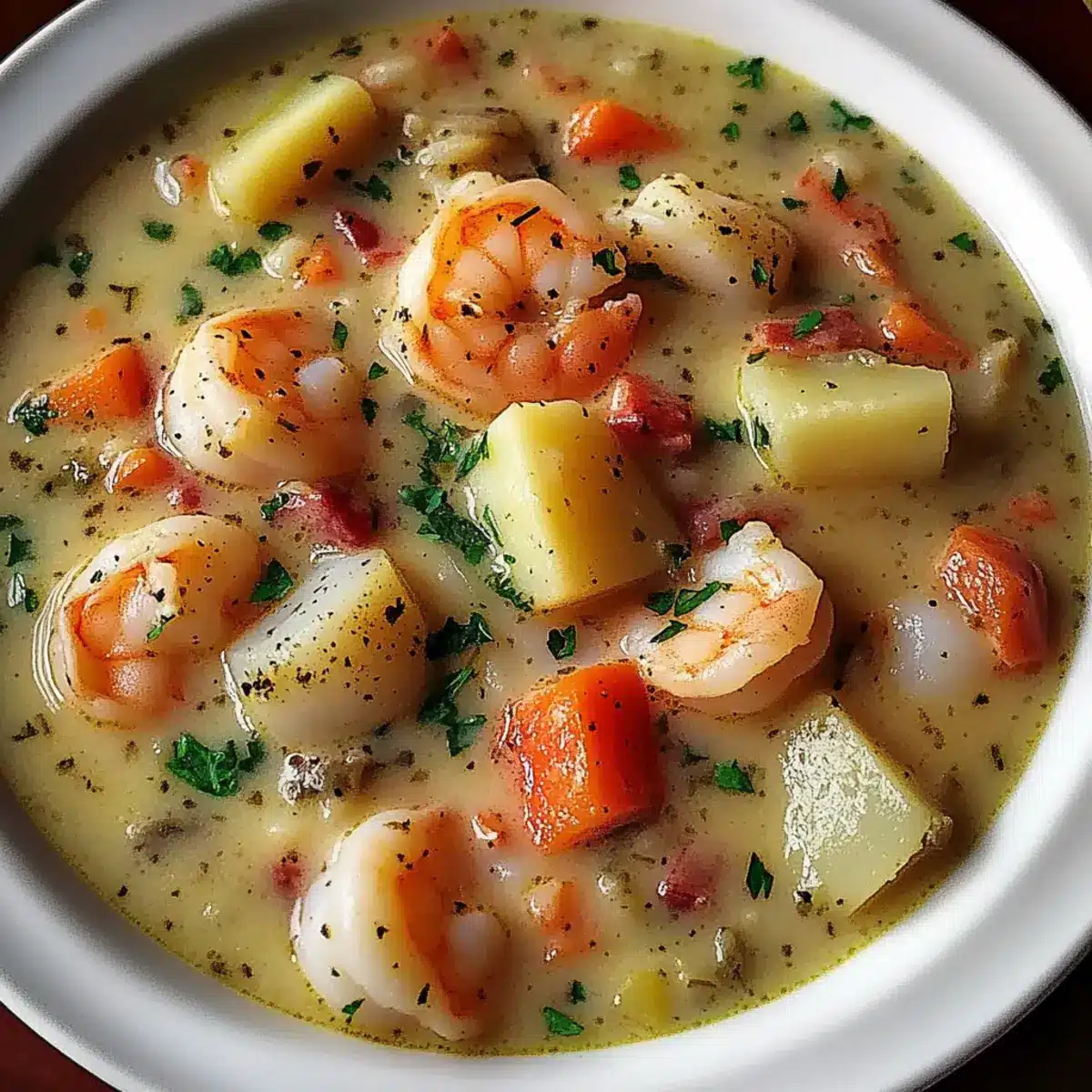
Nova Scotia Seafood Chowder: Dive Into Comforting Richness
Ingredients
Equipment
Method
- Melt 4 tablespoons of unsalted butter over medium heat in a large pot. Sauté diced onion, carrots, and celery for 5–7 minutes until soft.
- Stir in 2 minced garlic cloves and cook for an additional minute until fragrant.
- Toss in 2 diced potatoes, 4 cups of seafood stock, 1 teaspoon of dried thyme, and 1 bay leaf. Bring to a gentle simmer and cook for 15–20 minutes until potatoes are fork-tender.
- Carefully remove the bay leaf. Stir in 1 cup of heavy cream and 1 cup of milk, keeping warm over low heat.
- Fold in 1 pound of cubed haddock, 1 cup of peeled shrimp, and 12 ounces of scallops. Cook for another 5–7 minutes until seafood is opaque.
- Season to taste with salt and pepper.
- Ladle into heated bowls and garnish with freshly chopped parsley and lemon wedges.
Leave a Reply